AI in the service of document management
When we talk about artificial intelligence, we often think of spectacular images: autonomous cars, talking robots, virtual assistants.
But AI is profoundly transforming a more discreet yet equally strategic domain: document management.
In government agencies, hospitals, insurance companies, and large companies, documents represent an ocean of decisions, evidence, and knowledge.
EDM (electronic document management) has long enabled the centralization and structuring of this universe. But in the era of exponential volumes, hyper-regulatory complexity, and demands for instantaneity, this approach is reaching its limits.
This is where AI comes into play: not to replace existing processes or experts, but to support them, accelerate understanding, and inform decision-making.
A new documentary language
Thanks to advanced language models, AI enables in-depth document reading:
- detection of implicit intentions,
- identification of logical inconsistencies,
- highlighting of weak signals,
- prioritization of key elements.
We shift from a logic of storage to a logic of meaning.
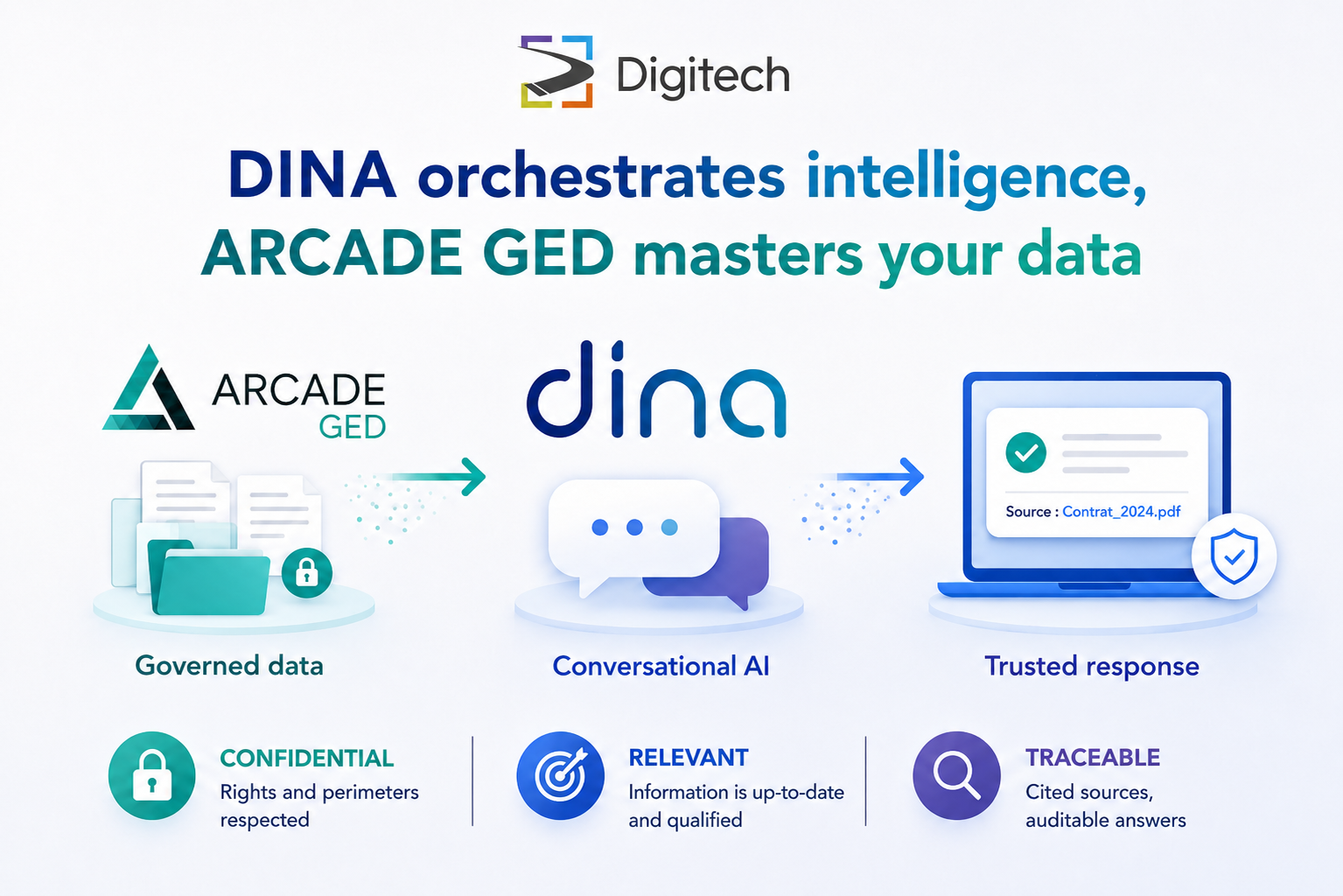
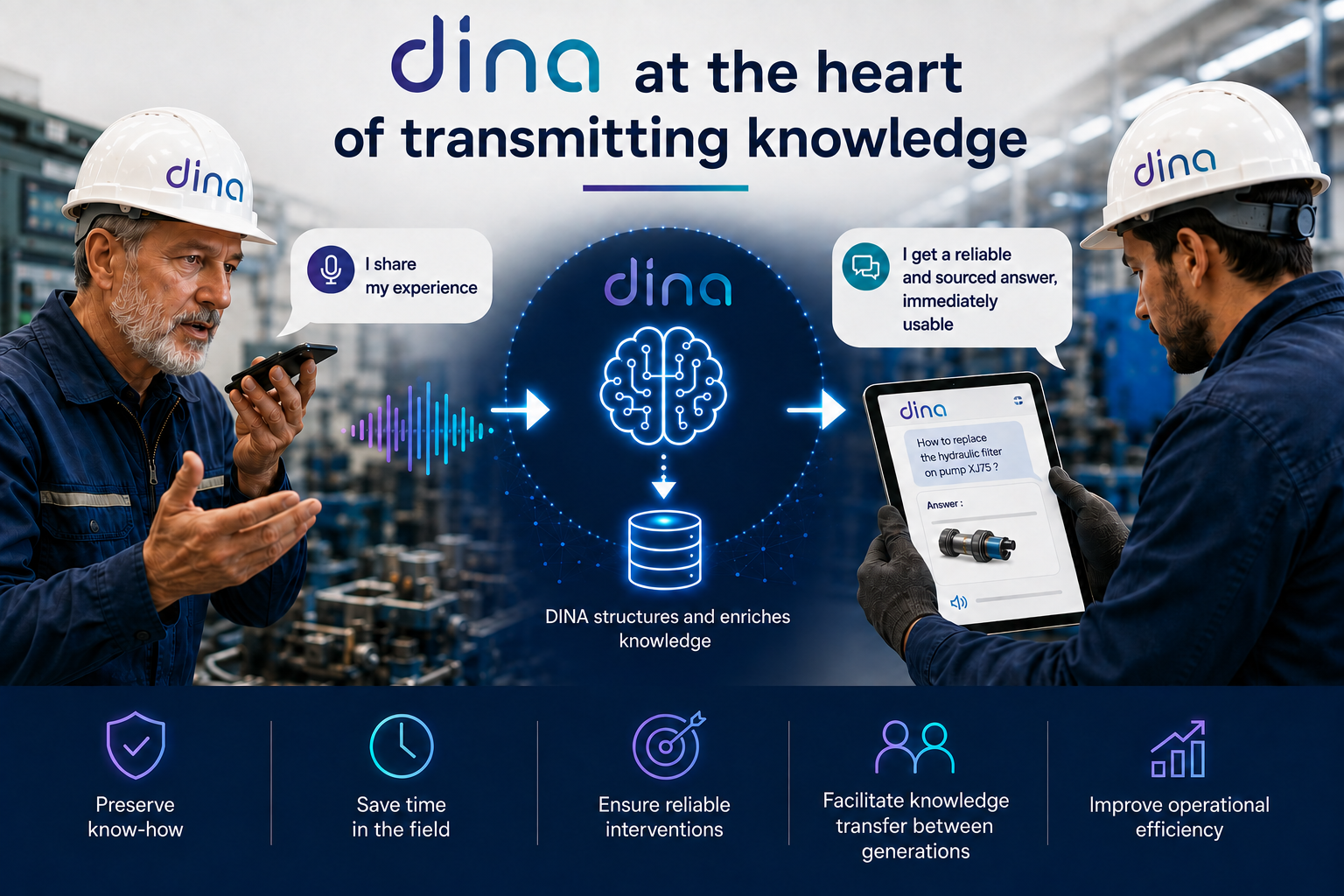
Solutions like DINA, developed by Digitech, embody this transformation: they don’t just manage, they understand. And most importantly, they adapt to business environments, internal rules, and legal requirements.
AI becomes an ally, not an imposed overlay.
Governance, sovereignty, and compliance: essential pillars
Document AI can only function under one condition: being trustworthy.
This requires:
- traceability of processes,
- explainability of decisions,
- sovereign hosting (local, private cloud, trusted zone),
- the use of specialized open-source models and controlled datasets.
In sensitive contexts (medical documents, public decisions, legal files), this requirement is not a luxury: it is a necessity.
Concrete use cases for all professions
Far from the fantasies of all-powerful AI, artificial intelligence applied to document management proves above all to be useful and pragmatic. It enables, for example:
- helping a legal professional identify a contentious clause in an 80-page contract,
- enabling an HR department to anonymize sensitive testimony,
- alerting an insurance analyst to an overlooked medical detail,
- automatically classifying incoming correspondence in a local authority according to actual priority.
In each case, the professional remains in control. But they are no longer alone facing the volume.
An invisible yet decisive revolution
With AI, the document is no longer a simple medium: it becomes an active source of knowledge.
The objective is not only to save time or reduce costs, but to:
- ensure reliable analysis,
- accelerate service delivery,
- free up valuable time for teams.
This is not a trend, but a new way of thinking about the relationship between information, human work, and artificial intelligence.
And perhaps, in a few years, we will look back with amazement at the time when we still had to “read to understand”… when technology can now read, to better help us think.
Ready to transform your documents into actionable intelligence?
Discover DINA, the AI orchestration platform that brings meaning to your data and strengthens your business processes.