
As artificial intelligence becomes ubiquitous within companies, a new challenge emerges: how to simultaneously manage multiple AI solutions in an effective, secure, and sustainable way? Here are the best practices to ensure optimal management of your AI portfolio.
1. Define a clear and structured strategy
The first step is to clearly establish your business objectives. Each AI must address specific use cases, with defined roles and responsibilities for your teams. This step clarifies expectations and avoids redundancies.
2. Map and centralize your solutions
To effectively manage multiple AIs, it is essential to conduct a comprehensive mapping. Identify each AI, its functionalities, technical dependencies, expected performance, and the resources consumed. Centralize this information in documentation accessible to all stakeholders.
3. Establish dedicated AI governance
Set up a team or committee specifically responsible for AI governance. This may include appointing a Chief AI Officer or a cross-functional committee to ensure strategic decision-making regarding the deployment, evolution, and potential decommissioning of AI models.
4. Choose a centralized orchestration platform
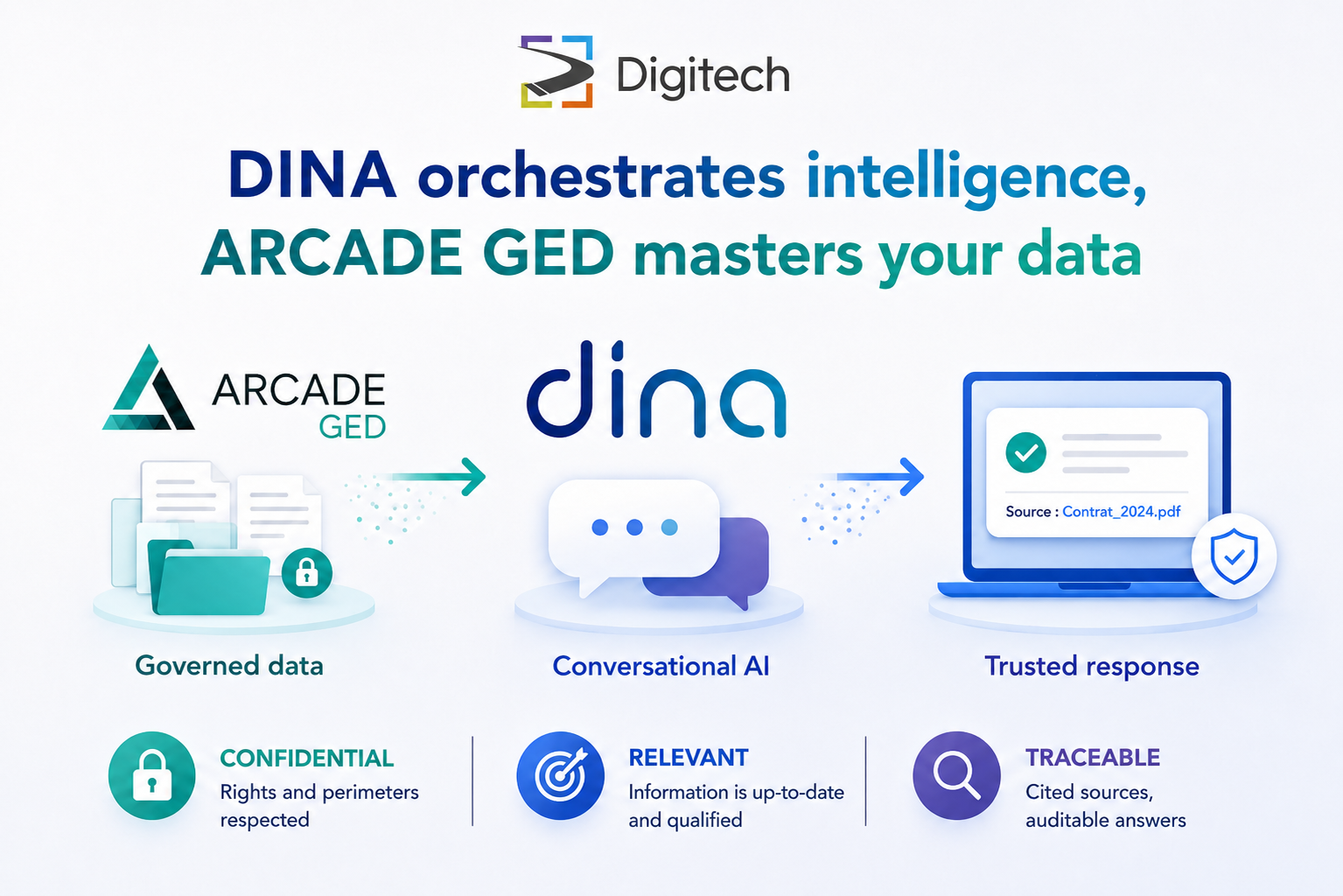
A centralized platform, such as DINA, facilitates the management, integration, and orchestration of different AI models. It enables unified resource management, centralized performance monitoring, and provides complete visibility over all AI solutions used within the company.
5. Standardize your processes and methodologies
To guarantee consistent use of AIs, it is essential to standardize integration, deployment, and monitoring procedures. Define technical standards as well as rigorous processes to validate performance, ethics, and regulatory compliance (GDPR, AI Act).
6. Ensure continuous performance monitoring
Effective AI management requires continuous monitoring. Monitor key performance indicators (accuracy, latency, user experience) and quickly identify potential drifts. Using a monitoring dashboard greatly facilitates this task.
7. Invest in team training and awareness
Optimal use of AIs requires well-trained and informed teams. Regularly offer training sessions to disseminate best practices for responsible and ethical AI, whilst developing a strong internal AI culture.
8. Manage risks and ensure compliance
Regularly conduct risk analyses associated with the simultaneous use of multiple AIs. Also ensure that each model fully complies with current regulations, such as the AI Act or GDPR, through regular audits.
9. Optimize resource management
Managing multiple AIs involves paying close attention to technical resources (cloud, storage, computing power). Prioritize intelligent pooling to reduce costs, optimize performance, and limit the environmental footprint.
Conclusion
By adopting these best practices, you ensure the effective, transparent, and secure management of your multiple AI solutions. You therefore maximize their added value whilst managing risks, for sustainable and responsible innovation.
Discover how the DINA platform can support you in this structured and simplified approach.